

Updated November 2026.
Water damage is one of the most expensive problems building owners face, and it rarely announces itself. A slow leak behind a wall or under a sink can run for days before anyone notices. Leak detection with automatic shut-off closes that gap: it finds the leak and stops the water without waiting for a person to respond.
Why undetected leaks cost so much
Most of the damage from a leak comes from how long the water runs, not from the leak itself. Water spreads into drywall, flooring and electrical systems, and in a multi-unit building a leak in one unit can reach the units around it.
Mold adds to the problem. The U.S. EPA advises drying water-damaged materials within 24 to 48 hours to prevent mold growth. If nobody knows a leak is happening, that window passes quickly.
How leak detection and automatic shut-off work
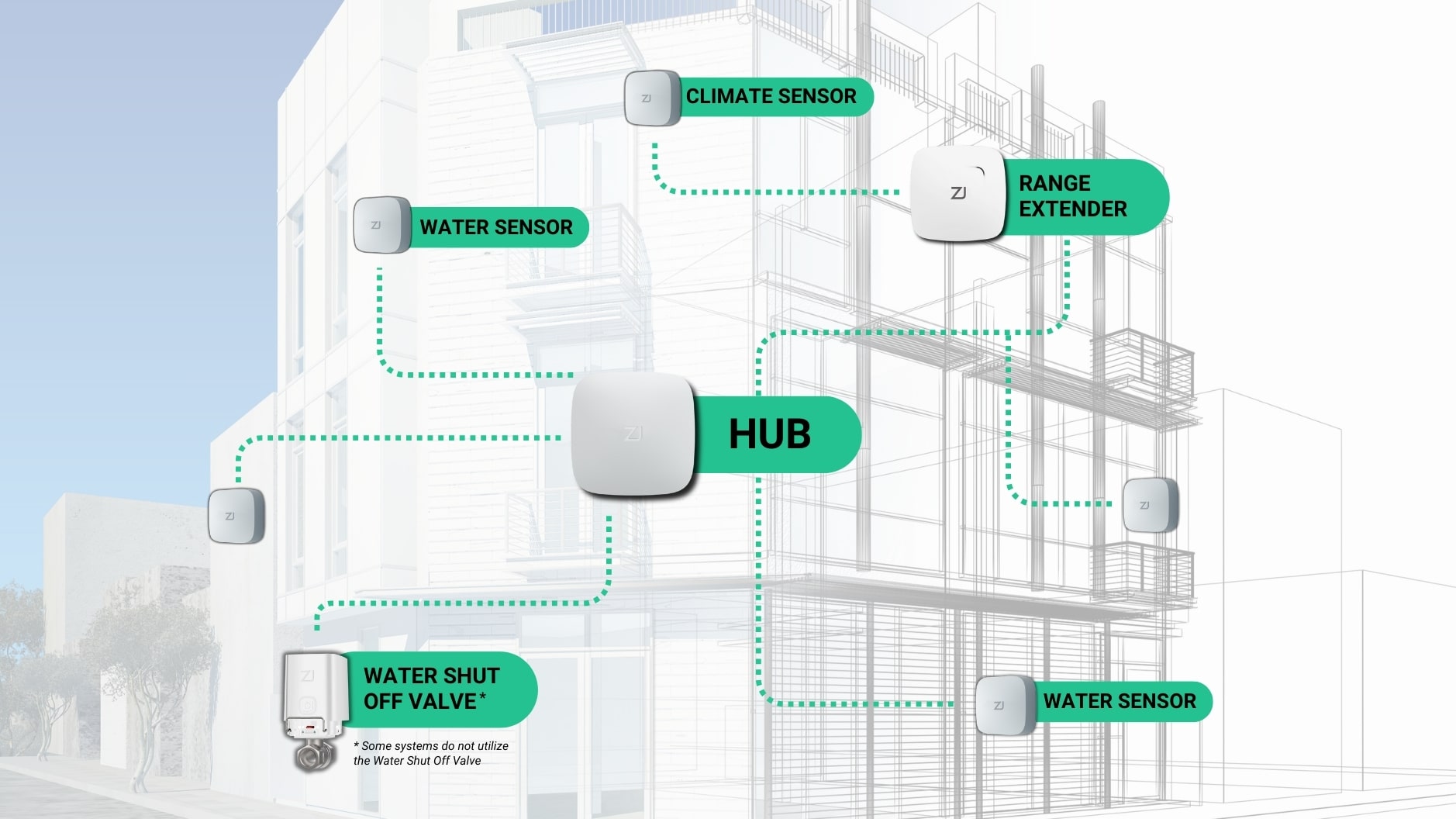
A ZoJacks system has three parts that work together:
- Sensors detect water and freezing temperatures. They sit where leaks start, such as under sinks, near water heaters and behind appliances.
- A hub connects the sensors and the valve and sends an alert as soon as something is detected.
- An automatic shut-off valve on the main water line stops the flow when a leak or freeze is detected, so the leak stops growing while people are on their way.
Residents, building managers and maintenance teams can all see what is happening, with a dashboard that shows detection events across the whole building. ZoJacks technicians handle installation, resident training and ongoing support.
What this looked like in a real pilot
In a 19-month pilot in New York, from May 2024 to December 2025, ZoJacks protected 107 homes. The system recorded 785 leak events and shut off the water automatically 575 times. There were 0 claims.
What it means for boards and property managers
- Less damage and disruption. Stopping water early keeps repairs small and keeps residents in their homes.
- A clear record. The dashboard shows what happened and when, which leaves less room for disagreement afterward.
- A better insurance conversation. A prevention system is worth raising with your broker or carrier when you review coverage. Ask how it applies to your building.
Next steps
If you manage or govern a building, the best next step is a conversation about its layout, risk points and budget. Learn how the system works, or see how it fits condo boards and property managers. When you are ready, request a quote.